
Navigating the Road to Recovery: Understanding Vision Changes Post-Concussion
Concussions are a common form of traumatic brain injury, often resulting from falls, sports-related incidents, or motor vehicle accidents. While concussions are typically associated with symptoms such as headache, dizziness, balance issues, and cognitive impairment, they can also lead to significant ocular dysfunction and post-concussion vision problems that impact quality of life. In this blog post, we’ll explore the impact of concussions on vision symptoms, such as ocular pain, poor depth perception, and more, as well as strategies for managing these symptoms during recovery.
Understanding Vision Changes Post-Concussion
The brain and visual system are intricately connected, with visual processing distributed across multiple regions of the brain. As a result, a head injury can disrupt various aspects of visual function, leading to a range of visual symptoms and challenges. Some common vision-related changes experienced post-concussion include:
- Blurred vision: Concussions can affect the stamina accuracy of the ability to focus to eyes, resulting in blurred vision, especially during reading or other visually demanding tasks.
- Double vision: Concussions can also affect the coordination of eye muscles and could lead to double vision, especially during reading and other near tasks.
- Ocular pain: Many patients with concussions report discomfort or eye pain, which may be a result of strained eye muscles or underlying visual dysfunction.
- Poor depth perception: Head trauma can lead to difficulties in spatial awareness and depth perception, making navigation and judging distances difficult.
- Eye tracking issues: Damage to the brain’s oculomotor control centres can result in problems with smooth pursuit eye movements (the eyes ability to follow a moving target in smooth continuous fashion, and saccadic eye movements (the eyes quick movements looking from one target to another without stopping in between). This could lead to skipping lines or losing your place when reading.
- Sensitivity to light (photophobia): Increased light sensitivity is a common symptom following a concussion, making it uncomfortable to be in bright or fluorescent lighting environments.
- Visual processing deficits: Concussions may impair the brain’s ability to process visual information efficiently, leading to difficulties with visual attention, tracking moving objects, and visual memory.
- Visual-spatial disorientation: Individuals post-concussion may experience challenges with spatial awareness, peripheral vision and depth perception, making it difficult to navigate space or judge distances accurately.
- Eye tracking and convergence problems: Damage to the brain’s oculomotor control centres can result in difficulties with eye tracking, smooth pursuit movements, and maintaining binocular alignment (convergence), contributing to visual discomfort and strain.
Check Your Symptoms with Free Online Symptom Checker
Are you facing post-concussion concerns? Access recommendations for your vision health through our complimentary online tool. Access Tool
Managing Vision Changes During Recovery
Addressing post-concussion vision problems requires a multidisciplinary approach. Here are some effective treatment options for managing vision-related symptoms after a concussion:
- Comprehensive eye examination: An evaluation can detect problems like ocular pain, poor depth perception, and other visual disorders that may arise post-concussion.
- Vision therapy: This can help improve eye muscle function and address difficulties with smooth pursuit eye movements.
- Gradual return to physical activity: Physical therapy plays an important role in overall recovery, as well as in reducing visual dysfunction.
- Occupational therapy: Working with an occupational therapist can provide additional support for daily activities that involve visual processing and movement.
- Neuro-functional lenses: Your eye doctor may prescribe eyeglasses containing prisms, tints and reading power, to help alleviate symptoms such as blurry vision, eye strain, or spatial disorientation by modifying the way light enters the eyes and correcting binocular alignment.
- Visual ergonomics: Modify work or study environments to reduce visual stress and fatigue, such as adjusting lighting, screen brightness, font size, and seating position to optimize comfort and productivity.
- Cognitive rehabilitation: Engage in cognitive rehabilitation programs focused on improving attention, memory, and executive function, as cognitive deficits can exacerbate visual processing challenges post-concussion.
- Gradual return to activities: Gradually reintroduce visually demanding activities, such as reading, screen time, or sports participation, under the guidance of a healthcare professional to monitor symptom progression and ensure safety during the recovery process.
What Are The Permanent Changes After a Concussion?
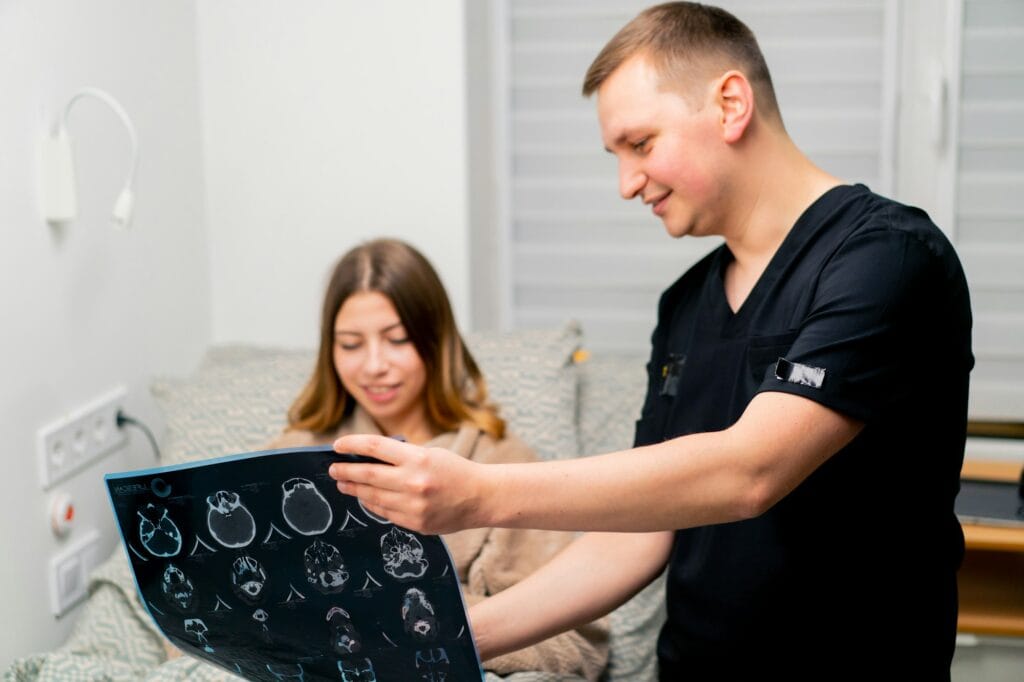
While most vision changes following a concussion are temporary and resolve over time, there can be permanent changes in some cases. These permanent changes may include:
- Persistent Visual Disturbances: Some individuals may experience ongoing issues such as visual snow syndrome, which involves seeing a constant “snow” effect in their visual field, or persistent photosensitivity, where bright lights continue to cause discomfort.
- Chronic Double Vision (Diplopia): Double vision may persist after the healing period, potentially necessitating ongoing treatment or use of prisms in glasses.
- Convergence Insufficiency: This condition, where the eyes struggle to work together when focusing on nearby objects, can remain an issue, impacting activities like reading.
- Central-Peripheral Integration Problems: Difficulties in the coordination of central and peripheral vision may result, affecting depth perception and spatial awareness.
Permanent vision changes are more likely to occur if the concussion is severe, if there is inadequate rest and recovery, or if there are pre-existing visual issues. For those experiencing long-lasting visual problems, working with a specialist, such as a neuro-optometrist, may help minimize the impact and improve visual function.
Vision Changes Are Common After a Concussion
Vision changes are a common yet often overlooked aspect of concussion recovery, impacting daily functioning and quality of life for individuals post-injury. By understanding the potential visual symptoms and challenges associated with concussions and implementing targeted interventions and rehabilitation strategies, individuals can effectively manage visual changes and support their journey to recovery. If you or someone you know is experiencing vision-related symptoms following a concussion, it’s essential to seek evaluation and treatment from qualified healthcare professionals trained in concussion management and vision rehabilitation. With proper intervention and support, individuals can navigate the road to recovery with improved visual function and well-being.