
Are Dry Eyes a Serious Concern? Quick Tips to Address Them Effectively
In the B.C. Interior, with its hot, dry, and dusty climate, combined with modern lifestyles dominated by screen time, dry eyes are a common issue. As an optometrist in Kamloops, we frequently diagnose and manage dry eye syndrome. This condition can severely impact your daily activities and overall eye health. Characterized by blurred vision, irritation, and insufficient moisture on the eye’s surface, dry eye symptoms can range from mild discomfort to more intense, persistent issues. In this post, we’ll explore the causes, symptoms, and dry eye treatments available to help manage this chronic condition.
What Are Dry Eyes?

Dry eye syndrome occurs when your eyes don’t produce enough tears or when the tear quality is compromised. Tears are essential for keeping your eyes lubricated, clean, and protected from environmental factors such as dust and wind. A healthy tear film consists of three layers: the oil layer, water layer, and mucus layer. When one or more of these layers is disrupted, it leads to tear evaporation and eye dryness.
Causes of Dry Eyes
Several factors can lead to dry eye syndrome, including:
- Aging: As you age, tear production declines, making dry eyes more common among older adults.
- Environmental factors: Living in a dry climate like Kamloops, using heating systems, or prolonged exposure to air conditioning can all contribute to tear evaporation.
- Prolonged screen time: Staring at digital screens for long periods reduces your blink rate, which disrupts the tear film and causes eye strain.
- Contact lenses: Long-term use of contact lenses can alter the tear film, leading to discomfort and eye irritation.
- Medications: Certain drugs, such as antihistamines, nasal decongestants, and oral contraceptives, can reduce tear production.
- Medical conditions: Rheumatoid arthritis, thyroid disorders, and Sjögren’s syndrome are some conditions that affect tear production and the quality of natural tears.
- Diet and lifestyle: A lack of omega-3 fatty acids from sources like fatty fish or omega-3 supplements can reduce the oil in your tear glands, leading to faster tear evaporation.
Symptoms of Dry Eyes
Dry eye symptoms can vary based on the underlying cause and severity. Common symptoms include:
- A dry, burning, or stinging sensation in the eyes
- Blurry vision and difficulty focusing, especially after long hours of screen time
- Light sensitivity or abnormal sensitivity to bright lights
- Excessive tearing due to reflex tearing in response to dryness
- Eye irritation or discomfort when wearing contact lenses
- Feeling like there is a foreign object in your eye
Simple Home Remedies for Dry Eyes
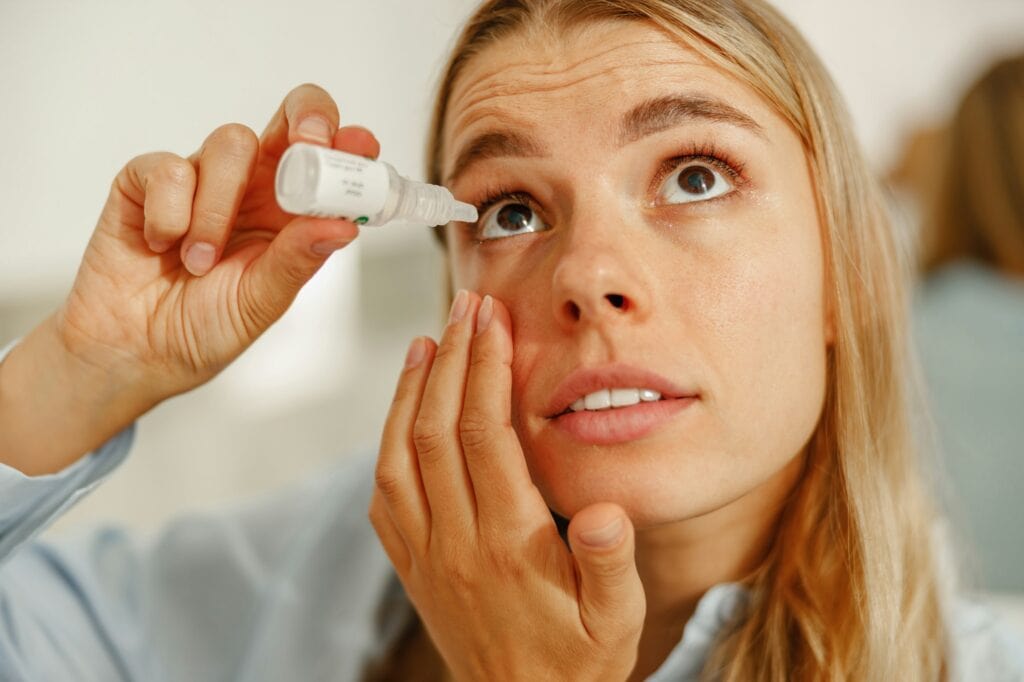
Managing dry eyes involves a combination of treatments and lifestyle changes. Here are a few natural remedies and dry eye care tips:
- Artificial tears: Over-the-counter artificial tear solutions can provide temporary relief by restoring moisture.
- Warm compresses: Applying a warm compress to your eyelids can help unclog the meibomian glands and improve the flow of the oil layer in your tears, reducing tear evaporation.
- Omega-3 supplements: Adding omega-3 fatty acids from sources like fatty fish, fish oil, or supplements can help improve tear quality and reduce inflammation.
- Proper hydration: Drinking plenty of water and maintaining a balanced diet rich in water-rich foods like leafy greens and sweet potatoes can promote adequate tear production.
- Eyelid hygiene: Washing your eyelids with diluted baby shampoo or using a preservative-free eyelid cleanser can help remove debris and reduce the risk of inflammation.
- Take frequent breaks: Use the 20-20-20 rule—every 20 minutes, take a 20-second break and look at something 20 feet away to reduce digital eye strain.
Advanced Treatments for Dry Eyes
For more severe cases of dry eye syndrome, advanced treatments may be necessary:
- Punctal plugs: Small plugs can be inserted into the tear ducts to block drainage, allowing your eyes to retain more tears.
- Prescription medications: In moderate to severe cases, medications like prescription eye drops may be prescribed to increase tear production and reduce inflammation.
- LipiFlow® or InMode treatment: These procedures use thermal pulsation and Intense Pulsed Light (IPL) to unblock the meibomian glands and improve the production of the oily layer of tears.
- Scleral lenses: Special contact lenses that provide a protective covering over the eye, helping to maintain moisture and comfort for those with intense symptoms of dry eyes.
Dry Eyes Are a Common Condition
Especially in regions like Kamloops where environmental factors play a role, dry eyes are common ailment for many. While dry eye syndrome can be a chronic and uncomfortable condition, a combination of lifestyle adjustments, artificial tears, omega-3 supplements, and advanced treatments can offer relief. Remember, if you’re experiencing dry eye symptoms, it’s essential to consult an eye care professional for a personalized treatment plan that fits your needs.